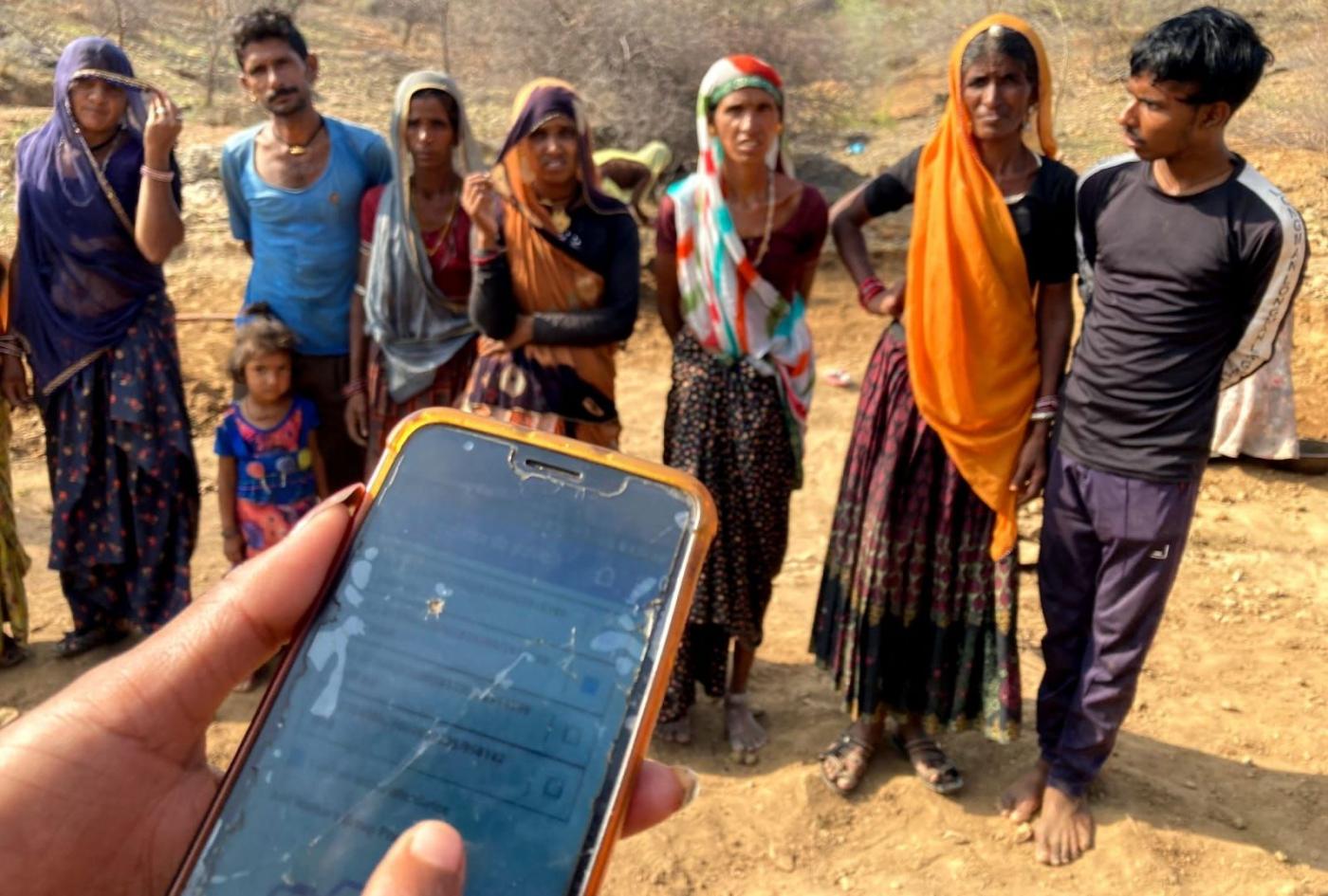
Pointing out that the NREGA Mobile Monitoring System (NMMS) digital-attendance App was made compulsory from 1 January onwards, while the Aadhaar-Based Payment System (ABPS) was made compulsory from 1 February, NSM said in a statement, “The main objection to it is that a majority of NREGA workers are not ‘eligible’ for ABPS. They cannot be paid via ABPS as things stand, and many may not be eligible for a long time.”
Until now, the NREGA payment system allowed two modes of wage payment: “account based” and “aadhaar based”. The former is a plain bank transfer. The latter uses aadhaar as a financial address and sends money to the person’s “last Aadhaar-linked account”. For the aadhaar-based option to work, not only must the worker’s job card and bank account be seeded with aadhaar, the account has also to be connected to the National Payments Corporation of India (NPCI) mapper.
“This connection, known as mapping, can be very cumbersome, because it requires meeting stringent KYC/e-KYC requirements, resolving possible inconsistencies between the aadhaar database and the bank account, etc.”, said NSM in the statement released at a media conference in Delhi.
It regretted, “After many years of relentless push for 100% mapping of NREGA workers’ accounts, a majority of NREGA workers are still not eligible for ABPS. According to the Ministry of Rural Development’s (MoRD’s) MIS Report 1.1.9, only 43% of NREGA workers are eligible for ABPS”, adding, “In other words, the MoRD has created a situation where a majority of NREGA workers cannot be paid, if the 30 January order is enforced.”
The civil rights group wonders, “What does the MoRD propose to do about wages due to NREGA workers who are not eligible for ABPS? Are their wages going to be held up, illegally, until they are eligible? Are they going to be prevented from working the first place? Only the MoRD can answer these questions?”
It underlined, “There is no evidence that it works better than the account-based system for NREGA wage payments – on the contrary. A LibTech India study of 18 lakh wage invoices for the first half of 2021-22 showed that aadhaar-based wage transfers were no quicker than account-based transfers. Nor is there any evidence that the ABPS helps to prevent corruption – on the contrary. Evidence from the ground suggests that a new nexus between Micro ATMs, data entry operators and bank officials and facilitates last-mile corruption.”
Talking to media, Nikhil Dey of the Mazdoor Kisan Shakti Sangatha, pointing towards the ongoing 100 day protest in Delhi against the GoI move, said, “It is enormously difficult for NREGA workers to come to Delhi and protest, but are being forced to do so to resist the assault on NREGA through imposition of the NMMS , ABPS wage payment , budget cuts and delays in payment of wages.” The result is that, “NREGA workers of West Bengal have not been paid for more than a year.”
Yogendra Yadav of the Swaraj Abhiyan said, the measures being introduced by the MoRD are “a clear demonstration of the GoI attempt to hollow out a law without formally repealing a law. The fact that the MoRD issued an order mandating ABPS payments on the same day that the budge allocation was reduced is a clear indication of deliberate, illegal and immoral hurdles being imposed by the Government to ensure less funds are spent on the programme.”
Maheshwari Devi of the from Muzaffarpur District, Bihar, who is with the MGNREGA Mazdoor Union, shared the difficulties she faces as as a NREGA worker because of the NMMS. According to her, she reaches work at 9am, and is made to stay at the worksite till 4pm because her photo needs to be uploaded twice a day for her to get her wage.
She added, “There are numerous instances when workers have come to work and have finished their work, but their attendance is not marked for the day because of server and technical issues with the NMMS. Workers have been made to return home without wages for work already completed by them.”
Stating that she had worked for 6 days, but was marked attendance for one day and went to the Block Officer and the District Officer to complain against the “gaayab haazri” (missing attendance), and is nowhere in Delhi to be heard, she insisted, “The MoRD should stop imposing such hurdles on workers and instead increase NREGA entitlement to 300 days and ensure wages are paid within seven days, and through the app.”She added, “There are numerous instances when workers have come to work and have finished their work, but their attendance is not marked for the day because of server and technical issues with the NMMS. Workers have been made to return home without wages for work already completed by them.”
Jean Dreze, who is visiting professor of the Ranchi University, said, the order issued by MoRD on mandating all NREGA payments to be routed through the ABPS alone was passed on the same day as the budget cut was allocated, and while the latter caught everyone’s attention the former did not. He noted, “Even though the MoRD has been pushing for ABPS, to date it has been able to only ensure that 43% of NREGA workers are eligible for ABPS payment.”
He predicted, “The enforcement of the order issued by MoRD on 30th January will result in the majority of MGNREGA workers not being paid their duly earned wages. And an even larger majority of workers will not know whether they are or are not eligible for ABPS. This is a truly shocking order and can destroy the programme.”
NSM demanded immediate removal of NMMS app that is "leading to denial of work and wages to workers", revocation of the order issued on 30th January 2023 mandating all payments to NREGA workers taking place through the ABPS, and putting in place a time bound action plan to ensure that all NREGA workers are paid their wages within 15 days of them completing work.
Comments